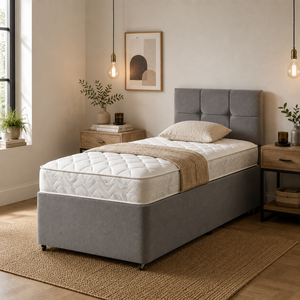
Find the right mattress type for you
With so many options available, it helps to know what each mattress type offers before you buy.
Memory foam mattresses mould to your body shape, helping to relieve pressure points and reduce aches. They're a popular choice for side sleepers and anyone who prefers a softer, more contouring feel.
Pocket spring mattresses use individual springs housed in their own fabric pockets, giving more precise support and reducing motion transfer, which makes them a great option if you share a bed.
Hybrid mattresses combine memory foam with springs, giving you the contouring comfort of foam alongside the support and breathability of a sprung mattress.
Open coil and foam-free spring mattresses offer a firmer, more traditional feel and tend to be a budget-friendly option, particularly for guest rooms or growing children who'll need a new mattress again before too long.
Orthopaedic mattresses are designed with extra firm support in mind, ideal if you have back or joint pain and need a mattress that won't let you sink in too far.
Cool touch mattresses are designed to help regulate temperature, making them a good choice if you tend to sleep hot or live somewhere that gets warm overnight.
Once you've found your size, from single mattresses to king size mattresses and double mattresses, you can filter further by type to find your perfect match.
Shop the right mattress for your bed frame
Your mattress and bed frame need to work together, so it's worth checking everything fits before you buy. Most mattresses suit a standard slatted or solid base, but if you have an adjustable bed, check that the mattress you're considering is rated as flexible enough to move with the frame; firmer or coil-based mattresses don't always bend well. We’d say go for the largest mattress size your room and budget can comfortably support - more space to stretch out usually means a better night's sleep!
Mattress firmness explained
The firmness of your mattress makes a big difference to comfort. Lighter sleepers and those who sleep on their side often prefer a softer mattress, since it allows the shoulders and hips to sink in slightly. Back and front sleepers, as well as heavier builds, tend to need a firmer mattress to keep the spine properly supported. If you're not sure where to start, a medium or medium-firm mattress is a safe middle ground that suits a wide choice of sleepers.
Do you need a mattress topper?
If your mattress still has life left in it but feels a little firm, worn, or just not quite right anymore, a mattress topper can be a cost-effective way to refresh it without buying a whole new mattress. Available in memory foam and other fillings, a topper adds an extra layer of comfort and can also help protect your mattress from everyday wear.
Shop mattress brands you can trust
We stock mattresses from some of the most trusted names in sleep, so you can buy with confidence. Bedmaster is known for combining quality construction with everyday affordability, making it a great starting point if you're after reliable comfort without overspending. DS Living offers a selection of supportive, well-made mattresses designed to suit a variety of sleep styles and budgets. And if you're after something a little more premium, Knight Sleep specialises in higher-end designs with a focus on durability and long-term comfort. Browse those and many more.
Frequently asked questions
How long should a mattress last?
Most mattresses last around seven to ten years, depending on the type and how well they're looked after. If you're waking up with aches that weren't there before, or you can see visible sagging, it's usually a sign that it's time for a replacement.
What's the best mattress for back pain?
A medium-firm to firm mattress generally offers the best balance of support and comfort for back pain. Orthopaedic and memory foam mattresses are both popular choices, as they help keep the spine supported without creating pressure points.
What features should I look out for when choosing a mattress?
Hypoallergenic mattresses are a good option if you're prone to allergies, as memory foam in particular is naturally resistant to dust mites. Vents and breathable covers help with airflow and temperature regulation, while handles make it easier to move and rotate your mattress. Pillow-top designs add an extra layer of plush on top of the main support layer, and rolled mattresses are a practical, easy-to-transport option if you're tight on space or moving the mattress yourself.
Can I use a memory foam mattress with a slatted bed frame?
Yes, memory foam and pocket sprung mattresses generally work well on slatted bases, as long as the slats are no more than around 7cm apart. If your slats are wider than this, the mattress may not get the support it needs.
Does mattress size need to match my bed frame exactly?
Yes, your mattress should match your bed frame size exactly, otherwise it can shift around or leave uncomfortable gaps. Always check the dimensions of both before ordering.